




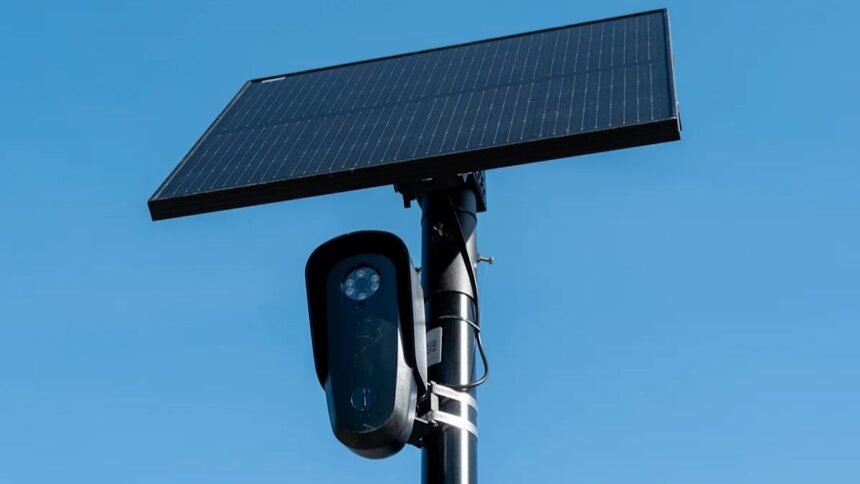
A federal judge has ruled that a Tulsa, Oklahoma, sheriff’s deputy violated a woman’s Fourth Amendment rights by using Flock Safety to look up her license plate without first obtaining a warrant.
According to a report by 404 Media, the decision does not establish a binding legal precedent. However, it is among the first federal rulings to determine that a search conducted through Flock’s system was unconstitutional.
In the case, Judge Sara Hill concluded that the deputy should have secured a warrant before searching the Flock database for the woman’s license plate. The judge noted that there appeared to be “no apparent reason” for the search beyond the fact that the vehicle carried a California license plate.
The deputy later relied on the woman’s travel history recorded by Flock when seeking justification to search her vehicle. During that search, authorities allegedly found 91 pounds of methamphetamine. Judge Hill ruled that the evidence obtained after the Flock search should be suppressed because it was the “fruit of a poisonous tree.”
The judge also raised wider concerns about warrantless access to Flock’s database. She argued that tracking a person’s movements in public may become a constitutional problem when law enforcement agencies can passively record people’s locations over long periods and later use that information for virtually any purpose.
Hill described the technology as a form of “indiscriminate mass surveillance.” She distinguished it from targeted location tracking, such as the issue considered in Carpenter v. United States, a Supreme Court case involving government access to cellphone location records.
According to Hill, Flock operates on a much broader scale because its cameras collect information on vehicles passing through locations connected to the network. Law enforcement can then request and access that information when needed.
The ruling comes as criticism of Flock continues to grow among people from across the political spectrum. Several local and state governments, including Florida and Texas, have indicated that they plan to stop using the technology. On Friday, Vermont Senator Bernie Sanders also introduced the Block Flock Act, a proposal that would prevent federal agencies from using automated license plate reader systems such as Flock.
Flock CEO Garretty Langley, who is scheduled to be interviewed on stage at TechCrunch Disrupt, has previously called for a balance between privacy and public safety. He has also apologized to women who were stalked by law enforcement officers through the Flock system.
Meanwhile, as more governments move away from the technology, Flock has reportedly offered voluntary buyouts to employees as part of an effort to reduce the size of its workforce.